Tuesday, June 29, 2010
A trip to Alaska Sea Life Center
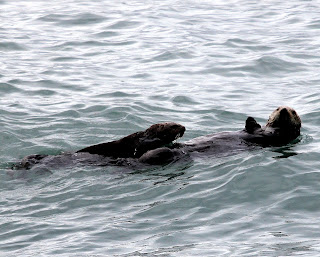
A new friend was interning at Bird TLC for a few weeks. Kendra was up from Washington State University and was headed back to visit family and friends on Tuesday. She wanted to visit Seward before she left, so it was a day trip on Sunday.
This male harlequin duck.
This common murre.
Monday, June 28, 2010
Saturday, June 26, 2010
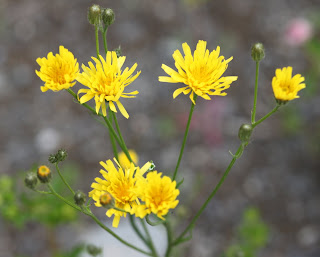
Groundsel
Another nice colored flower found through out Alaska except in the arctic regions. Right now they're coming into bloom. It's a nice change from the dandelions we have talked about. This plant will grow 12-24 inches.
Thursday, June 24, 2010
Of ducks and daisy's
It's been cloudy in the morning, but burning off in the afternoon. So, obviously mornings have been play time. Not just for me but for the ducks also. Fortunately there's lots of nice ponds / lakes around Anchorage to see them at.
You have to love Arctic Daisy's. They grow everywhere and just add that smile to a wild place.
Wednesday, June 23, 2010
Sunday, June 20, 2010
Around the town
So far it's been a mild summer, but lots of birds to be found. We've been getting our share of rain so the forest fires have died off and there's lots of green around.
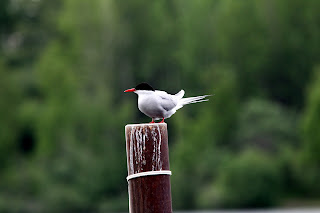
This arctic tern was playing with the high wind. It was flying in place intentionally. I know how they like to hover, but it was literally flying in place against the wind.
Lots of Canada Geese. These are a neat bird, but some can consider them a nuisance from time to time. They are definitely a family affair.
Friday, June 18, 2010
Raven House Mouse
If you want to read an enchanting story to your kids or grand kids and learn more about one of Alaska's native people, the Tlingit people, here's your chance. This very informative and easy to read story of a orphaned mouse that ends up living in a clan house in Haines, Alaska. Both young and adult readers can learn a lot about the Tlingit culture.Tuesday, June 15, 2010
1st Kenai trip of the year
I went down to the Kenai River Festival this past weekend. The weather was awesome but it was a little windy most of the time. Away from the festival, we were shown some of the hot birding spots by our host Ken and Connie. These folks know the Kenai Peninsula when it comes to hot spots.
This very active eagles nest was great to see since I deal with so many eagles back at the clinic. I wish I could have got a better shot that included the chick, but the wind prevented that.
Thursday, June 10, 2010
I still live at home or close to it
Tuesday, June 8, 2010
Sunday, June 6, 2010
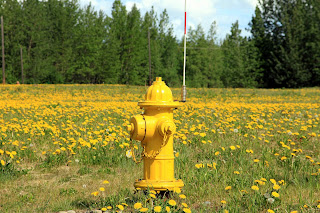
In a field of dandelions
Saturday, June 5, 2010
Thursday, June 3, 2010
2 Artist! 1 First Friday
Acai Alaska will be showcasing 2 Artists this First Friday June 4th 7pm! "Random Acts of Photography" by Robert Kasuboski and Britt Coon. Come join us enjoy some amazing photography, good company and an Ono "delicious Hawaiian" bowl. Aloha!
Robert Kasuboski: Grew up in the desert of New Mexico. He spent as much of his time as he could outdoors, camping, hiking and and just enjoying nature. After college it was time for different scenery and he now calls Alaska home.
He began photography in 1984. He has done a lot of experimenting over the years with outdoor and nature photography. www.robertk.exposuremanager.com
Britt Coon: Loves photography. Her main passion is photographing dog mushing and wildlife in Alaska, but many of her photos come from visiting other events. You'll seldom see her far away from her camera. Her leap into the world of photography began through her volunteering with the Bird Treatment & Learning Center. Their releases after rehabilitation inspired her to capture the moment when they are set free. akbritt@ak.net
See you this First Friday ; )
Wednesday, June 2, 2010
Tuesday, June 1, 2010
It's a family affair
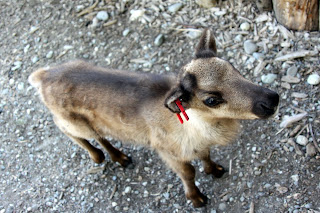
[Note: This narrative is taken from "Reindeer Roundup", a curriculum book developed and authored by Carrie Bucki, © 2004 by the Reindeer Research Program, University of Alaska Fairbanks.]
Throughout the mid to late 1800s, whaling ships moved up and down the Bering Sea coast of Alaska. Traders from these ships came ashore and traded guns, ammunition, tobacco, alcohol, and foods like sugar and flour for pelts, meat and hides. When the production of plastics and petroleum products became prevalent, whaling was no longer profitable and whalers left the area. Unfortunately, by the time they left, the local populations of marine mammals had been severely impacted, leaving the Alaskan Natives without one of their major food sources. There is also evidence that terrestrial mammal populations were on the decline during this period. Diminished wildlife populations combined with a new dependence upon the food and goods introduced by the whalers left Alaska natives in uncertain circumstances.
By 1888, Captains of the U. S. Revenue Cutter Service ships that patrolled the waters of western Alaska became concerned for the well being of the Native Alaskans living along the Bering Sea villages. Captain Healy of the U. S. Revenue Cutter Bear was one of these Captains. He was a mulatto slave born on a Georgia plantation and ran away from home at the age of 16 to become an officer on a merchant vessel, working his way up to Captain. Reports of starvation among Alaskan Natives reached Dr. Sheldon Jackson, the Commissioner of Education in Alaska and a Presbyterian minister. Dr. Sheldon Jackson devoted the last half of his life to serving the people of Alaska and he established schools and missions throughout western Alaska. Jackson's goal was to broaden the resource base of Alaska Native populations and provide economic development where none was available. It was Captain Healy who first suggested the idea to Jackson of transporting domestic reindeer from Siberia to western Alaska as a solution to the food shortages among Native Alaskans. Healy had traveled extensively throughout the Bering Sea and had witnessed first hand the Native people of eastern Siberia and their success at raising reindeer.
Jackson received approval from Congress to introduce reindeer into Alaska from Siberia but received no funds for the project. He appealed to the women of the Presbyterian Church and they raised $2,000 to purchase reindeer. Jackson had many critics of his plan back in Washington, so he decided to perform a 'trial run' by purchasing 16 reindeer the first year and shipping them to Amaknak Island to see if they would survive the voyage and the winter. The reindeer did both and produced two calves the following spring. During the summer 1892, Captain Healy made five trips to Siberia and brought a total of 171 reindeer along with 5 Siberian herders, employed as herding instructors, to the Teller Reindeer Station established at Port Clarence.
The Siberian herders returned home after cultural clashes with Native Alaskans. In 1894, Scandinavian families, along with dogs and sleds were brought to Alaska to teach reindeer herding.
Congress appropriated funds from 1896 until 1902 to purchase more reindeer from Russia. Small reindeer herds were distributed to mission schools on the Seward Peninsula and throughout western Alaska under the direction of Jackson, to teach Native Alaskans to herd. Additional herds were established along the route to Point Barrow in 1898 when Jackson ordered a drive of over 400 reindeer to an ice-bound ship of starving sailors.
With the discovery of gold in Nome in 1898, reindeer were used to their full potential. There was a large demand for meat and reindeer were used to pull sleds of gear for the miners. The first postal reindeer route was established between St. Michael and Kotzebue in 1899. Reindeer were preferred to dogs for carrying supplies, as they were less expensive and they could graze freely, whereas food needed to be carried for the dogs.
Jackson continued to use reindeer as a means for teaching Native Alaskans English so they could do business with white people. Girls were taught sewing and housework, while men and boys continued to apprentice as reindeer herders. A reindeer apprentice required five years of schooling with room and board. They earned two female reindeer and their calves per year. After five years, the new herder is loaned enough reindeer to increase his herd size to 50 head.
In 1906, a government investigation by the Department of the Interior found that Scandinavians and mission schools rather than Native Alaskans owned a majority of the reindeer in Alaska. As a result, a new government policy was established with the goal of placing more reindeer into Native ownership and Dr. Jackson's serviced were ended. By 1913, Alaskan Natives owned over 30,000 or 65% of the reindeer in Alaska. By the late 1920s there were over 400,000 reindeer in western Alaska and the population peaked at 640,000 reindeer in the 1930s! In 1937, the Reindeer Act was passed which restricted ownership to Native Alaskans. This act is still in place today.
By the 1950s approximately 50,000 reindeer were present on the Seward Peninsula. Reasons for the sharp decline are the harsh winter of 1938-39, losses to migrating caribou, predation by wolves, and the lack of attendance to herds. In the 1960s there was a gradual selection of Native Alaskan owners to become private reindeer herders with designated ranges. In 1968, the Bureau of Indian Affairs (BIA) became responsible for range management by issuing grazing permits and monitoring range condition. Soon after, modern range management techniques were applied to reindeer herding. Reindeer herding in Alaska has been a cultural and traditional mainstay in many western villages. The traditions surrounding reindeer herding and the use of their products continues today.
Currently, there are approximately 20 reindeer herders and 20,000 reindeer in western Alaska. These herders belong to the Reindeer Herders Association, which is part of the Kawerak, Inc. Natural Resources Division. This group provides assistance in the development of a viable reindeer industry to enhance the economic base for rural Alaska and to improve the management of the herds. An additional 10,000 reindeer exist in herds on Nunivak, St. Paul, Umnak, and other Aleutian Islands along with a few fenced herds along Alaska's road system. In the lower 48 states, there are approximately 1,000 reindeer, which are owned by private farms and zoos.